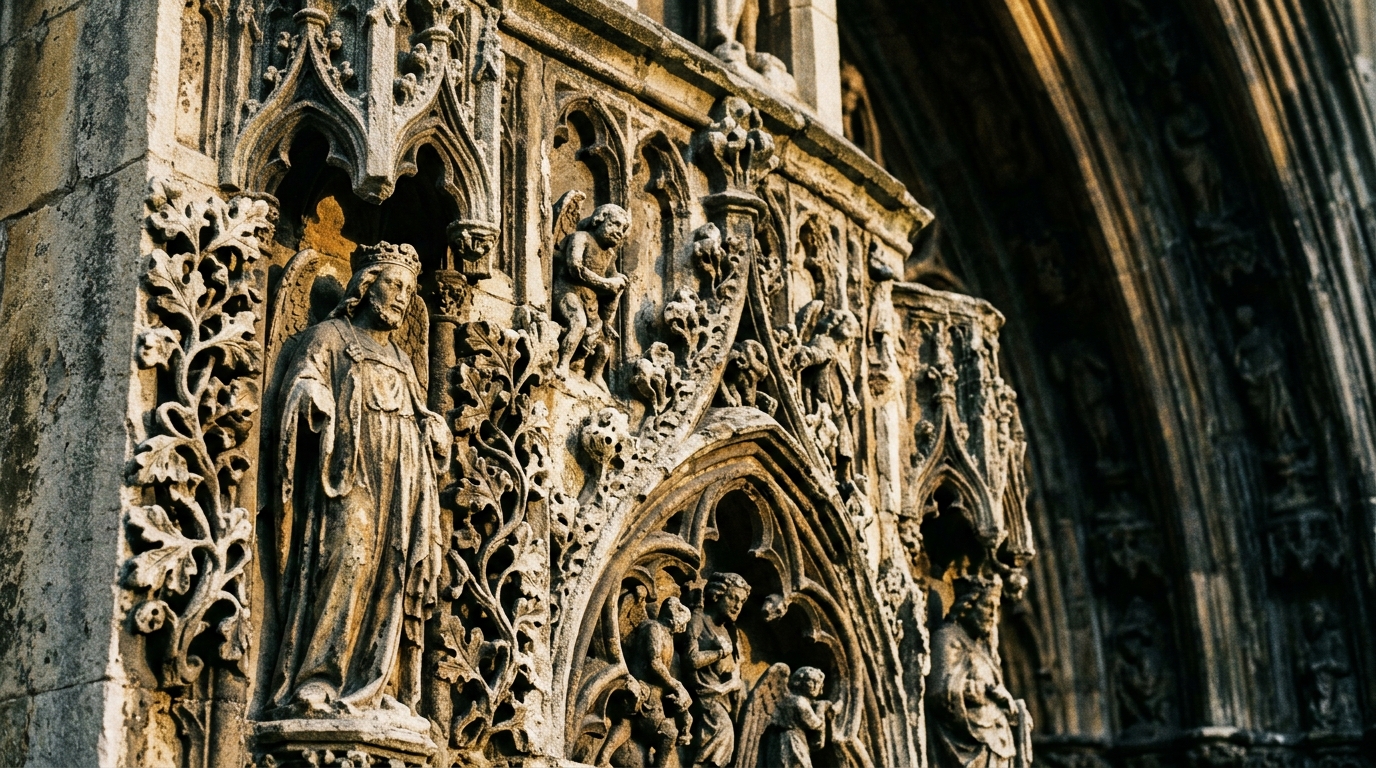
Westminster Abbey: A Living Monument
Founded as a Benedictine monastery in 960 AD, Westminster Abbey survived the Norman Conquest, was magnificently reborn in Gothic stone under Henry III, and has stood ever since as Britain's consecrated stage — the church where every monarch since William the Conqueror has been crowned, and where the nation's greatest stories are carved into enduring limestone.
A Thousand Years in Stone
Timeline of Key Moments
From a Benedictine founding on a marshy island to a billion-watched royal wedding — eight pivotal dates that shaped Westminster Abbey and the nation around it.
The Founding
Benedictine monks established a monastic community on Thorney Island, a marshy ground beside the River Thames. This modest foundation laid the spiritual and physical groundwork for what would become one of the most consequential religious sites in the English-speaking world. The earliest structures were simple, devout, and entirely unaware of the grandeur to come.
The Founding
Benedictine monks established a monastic community on Thorney Island, a marshy ground beside the River Thames. This modest foundation laid the spiritual and physical groundwork for what would become one of the most consequential religious sites in the English-speaking world. The earliest structures were simple, devout, and entirely unaware of the grandeur to come.
Edward the Confessor Rebuilds
King Edward the Confessor, driven by profound piety and a vow to undertake a pilgrimage he could never complete, chose to rebuild the Abbey on a magnificent scale instead. His Romanesque church was among the largest in England at the time, a bold statement of royal faith and ambition. Edward devoted the final decades of his life — and much of his treasury — to its construction.
Edward the Confessor Rebuilds
King Edward the Confessor, driven by profound piety and a vow to undertake a pilgrimage he could never complete, chose to rebuild the Abbey on a magnificent scale instead. His Romanesque church was among the largest in England at the time, a bold statement of royal faith and ambition. Edward devoted the final decades of his life — and much of his treasury — to its construction.
Consecration of the Abbey
On 28 December 1065, Edward the Confessor's great church was consecrated in a solemn ceremony, fulfilling the king's lifelong devotion. Edward himself was too ill to attend, and he died just eight days later, the Abbey standing as both his monument and his legacy. He was buried before the high altar, beginning the royal burial tradition that would define the site for centuries.
Consecration of the Abbey
On 28 December 1065, Edward the Confessor's great church was consecrated in a solemn ceremony, fulfilling the king's lifelong devotion. Edward himself was too ill to attend, and he died just eight days later, the Abbey standing as both his monument and his legacy. He was buried before the high altar, beginning the royal burial tradition that would define the site for centuries.
First Coronation — William the Conqueror
On Christmas Day 1066, the Norman duke William the Conqueror was crowned King of England inside the newly consecrated Abbey, establishing a tradition unbroken to this day. The ceremony was marked by chaos — the acclamation of the crowd so alarmed Norman guards outside that they set fire to neighbouring buildings. Despite the turbulent beginning, Westminster Abbey became England's coronation church from that moment forward.
First Coronation — William the Conqueror
On Christmas Day 1066, the Norman duke William the Conqueror was crowned King of England inside the newly consecrated Abbey, establishing a tradition unbroken to this day. The ceremony was marked by chaos — the acclamation of the crowd so alarmed Norman guards outside that they set fire to neighbouring buildings. Despite the turbulent beginning, Westminster Abbey became England's coronation church from that moment forward.
Henry III Begins the Gothic Rebuild
Inspired by the soaring Gothic cathedrals of France and driven by deep veneration for Edward the Confessor, King Henry III ordered a complete rebuilding of the Abbey in the French Gothic style. Work continued for decades, producing the magnificent nave, the rose windows, and the extraordinary height that still commands awe today. Henry's ambition transformed a Romanesque church into a Gothic masterpiece at the heart of English identity.
Henry III Begins the Gothic Rebuild
Inspired by the soaring Gothic cathedrals of France and driven by deep veneration for Edward the Confessor, King Henry III ordered a complete rebuilding of the Abbey in the French Gothic style. Work continued for decades, producing the magnificent nave, the rose windows, and the extraordinary height that still commands awe today. Henry's ambition transformed a Romanesque church into a Gothic masterpiece at the heart of English identity.
Lady Chapel Added by Henry VII
King Henry VII commissioned the breathtaking Lady Chapel — now known as the Henry VII Chapel — as a monument to the Tudor dynasty and a shrine to the Virgin Mary. Its fan-vaulted ceiling, considered one of the finest examples of Perpendicular Gothic architecture anywhere in the world, cascades like frozen lacework overhead. The chapel also serves as the spiritual home of the Order of the Bath, whose banners hang in permanent honour.
Lady Chapel Added by Henry VII
King Henry VII commissioned the breathtaking Lady Chapel — now known as the Henry VII Chapel — as a monument to the Tudor dynasty and a shrine to the Virgin Mary. Its fan-vaulted ceiling, considered one of the finest examples of Perpendicular Gothic architecture anywhere in the world, cascades like frozen lacework overhead. The chapel also serves as the spiritual home of the Order of the Bath, whose banners hang in permanent honour.
Queen Elizabeth II Crowned
On 2 June 1953, Queen Elizabeth II was crowned in Westminster Abbey in the first coronation ceremony ever broadcast on television, watched by millions across the world. The ancient rites — anointing, investiture, and the placing of St Edward's Crown — were performed with the same sacred solemnity as every coronation since 1066. For a nation emerging from the shadow of war, it was a moment of collective renewal and hopeful pageantry.
Queen Elizabeth II Crowned
On 2 June 1953, Queen Elizabeth II was crowned in Westminster Abbey in the first coronation ceremony ever broadcast on television, watched by millions across the world. The ancient rites — anointing, investiture, and the placing of St Edward's Crown — were performed with the same sacred solemnity as every coronation since 1066. For a nation emerging from the shadow of war, it was a moment of collective renewal and hopeful pageantry.
Royal Wedding of William & Catherine
On 29 April 2011, Prince William and Catherine Middleton were married before nearly two thousand guests in Westminster Abbey, with an estimated two billion viewers watching worldwide. The ceremony blended centuries-old liturgical tradition with a warmth and modernity that captivated a global audience. The Abbey's great nave, lined with towering trees brought inside for the occasion, became an unforgettable image of living heritage.
Royal Wedding of William & Catherine
On 29 April 2011, Prince William and Catherine Middleton were married before nearly two thousand guests in Westminster Abbey, with an estimated two billion viewers watching worldwide. The ceremony blended centuries-old liturgical tradition with a warmth and modernity that captivated a global audience. The Abbey's great nave, lined with towering trees brought inside for the occasion, became an unforgettable image of living heritage.
vvestmisterabbey — Centuries of Stone
Stone, Light & Geometry
Eight centuries of architectural ambition, compressed into five defining features. Each one a chapter in the Abbey's ongoing conversation between faith, power, and craft.
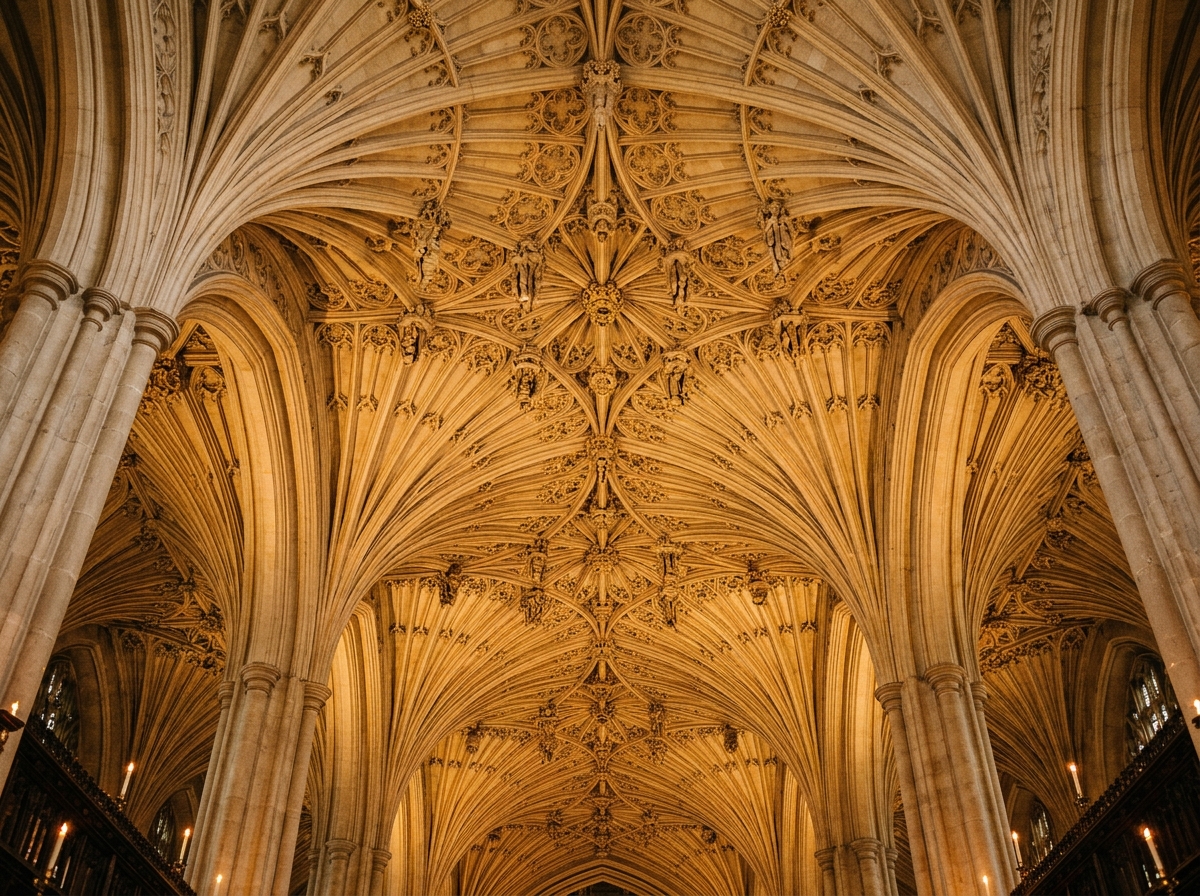
Fan Vaulting of Extraordinary Intricacy
The Henry VII Lady Chapel
At the eastern terminus of Westminster Abbey stands one of the supreme achievements of English Perpendicular Gothic architecture — the Lady Chapel commissioned by King Henry VII and completed under his son Henry VIII. Architect Robert Vertue, alongside his brother William, conceived a ceiling that has drawn wonder from visitors for five centuries.
The fan vaulting spans 29 metres in length and rises to a crown height of approximately 14.5 metres above the floor. Each pendant — and there are 108 of them — descends like a stone stalactite, carved from single blocks of Huddlestone limestone. The effect, as the sixteenth-century historian John Leland wrote, is of 'a wonder of the world.' No mortar joints are visible in the vault's interior face; the geometry is load-bearing through pure mathematical precision.
The chapel also serves as the chapel of the Order of the Bath, and the heraldic banners of current Knights Grand Cross hang from the carved stalls, creating a theatrical clash of medieval stone and living heraldry. Henry VII and his queen Elizabeth of York rest beneath a magnificent gilded bronze tomb by Pietro Torrigiano, the first significant Renaissance sculpture to arrive in England.
All measurements are based on published surveys by the Dean and Chapter of Westminster and Historic England records.